


Diagnostics
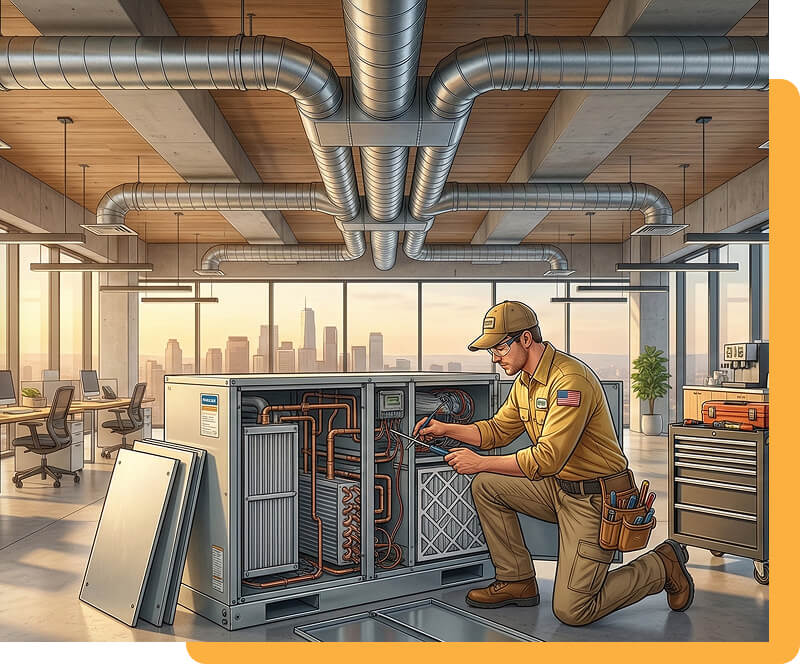
Diagnostics
A/C & Heating Diagnostic Fee Adds Transparency in Pricing
AC diagnostic travel fees cover the costs of sending a technician to your location, including fuel, vehicle maintenance, insurance, and the technician's travel time. These fees ensure technicians are paid for their expertise in identifying the issue. This fee is waved if the Homeowner decides to install a new system or in case of any major repairs. This fee doesn’t cover parking fee that may be needed for your specific area.
1: Customer Interview and Preliminary Understanding
Gather symptoms: comfort complaints, unusual noises, odors, humidity issues, temperature inconsistencies.
Record system details: age, type (gas/electric), last service date, observed changes.
Note operating conditions: thermostat settings, zoning, occupancy patterns, recent renovations.
2: Visual Inspection and Safety Check
Inspect exterior and interior units for corrosion, damage, or obstructions.
Check accessible ducts for leaks, disconnects, and insulation integrity.
Assess electrical panel, wiring, and safety devices; verify presence and operation of CO detectors where applicable.
Look for moisture, mold, condensate drainage issues, and standing water.
3: Thermostat and Controls Evaluation
Verify compatibility and proper wiring; confirm power, common wire presence, and battery status.
Test thermostat accuracy (setpoint vs. actual room temperature) and response time.
Evaluate control sequences for heating, cooling, and auxiliary/emergency settings.
4: Air Quality, Airflow, and Filtration Assessment
Measure air filter condition and filter type; document recommended replacement or cleaning.
Perform airflow checks at supply and return grilles to identify imbalances.
Inspect indoor coil cleanliness and describe impact on performance.
Evaluate ventilation and humidity control features.
5: Refrigerant and Cooling System Analysis (for AC/Heat Pump)
Check refrigerant charge against manufacturer specifications using appropriate gauges.
Perform leak inspection with electronic detectors and odor/visual cues.
Assess compressor operation, suction/charging pressures, and superheat/ subcooling if applicable.
6: Heating System Evaluation (Furnace/Heat Source)
Inspect burner assembly, flame stability, ignition system, and heat exchanger condition (where accessible).
Test flame sensor, inducer, and safety shutoffs; verify proper venting and exhaust.
Check combustion efficiency and, if applicable, carbon monoxide alarm status.
7: Ductwork and Air Distribution Review
Inspect for loose connections, dents, and seal integrity along the duct network.
Confirm insulation of ducts in unconditioned spaces; identify thermal losses.
Evaluate return air paths and overall system pressure relationships.
8: System Operation Tests
Run a full heating cycle and a full cooling cycle while observing performance.
Record cycle times, staging behavior (single-stage, multistage, variable-speed), and any short cycling.
Measure supply/return temperatures and humidity impact to verify cooling/heating capability.
9: Performance Diagnostics and Data Logging
Use diagnostic tools to capture electrical current, voltage, and static pressure where available.
Document energy usage patterns and correlate with outdoor conditions.
Record any abnormal noises, vibrations, or odors during operation.
10: Safety, Compliance, and Documentation
Confirm gas line integrity, clearance, and gas leak testing when applicable.
Ensure compliance with local codes for combustion appliances and electrical work.
Compile a written report with findings, photos, and certified test results.
11: Problem Prioritization and Recommendations
Classify issues by safety risk, reliability impact, and efficiency loss.
Provide prioritized action plan with optional fixes, estimated costs, and energy impact.
Suggest maintenance or replacements when better long-term value is evident.
12: Customer Walkthrough and Education
Explain findings in plain language with visual aids or photos.
Demonstrate simple troubleshooting steps and maintenance routines.
Deliver a clear, written summary and answer questions about next steps.
13: Follow-Up and Verification
Schedule any recommended service visits or refurbishments.
Re-test after corrective actions to confirm issue resolution and performance targets.
Offer ongoing monitoring options (maintenance plans, remote diagnostics).
Quality Standards and Documentation
All diagnostics performed by trained, licensed technicians following manufacturer guidelines.
Use of calibrated instruments; maintain traceable records and notes.
Provide customer-friendly report: executive summary, detailed findings, photos, and actionable recommendations.
Optional Add-Ons (Based on Findings)
Filter upgrades or air purifier installation.
Duct sealing/insulation improvements.
Thermostat upgrade and optimizing programming.
Refrigerant leak repair or component replacement.
System tune-up and performance optimization.